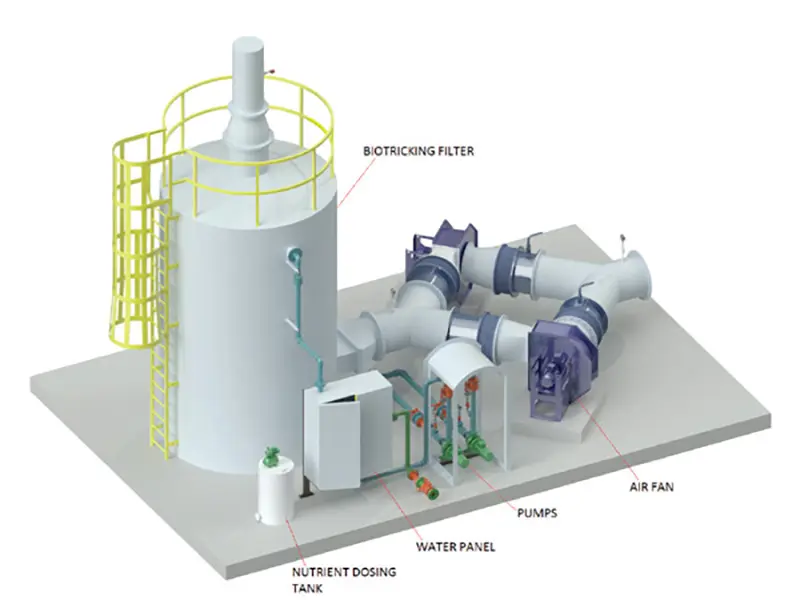
Stage 1: Chemical Scrubbing
Malodorous gases such as ammonia, hydrogen sulfide, and acidic/basic vapors are absorbed and neutralized by a chemical solution through wet scrubbing.
Stage 2: UV Photolysis
Using high-intensity UV light at specific wavelengths (185nm & 254nm), remaining organic molecules and VOCs are photochemically decomposed into harmless compounds.

Stage 3: Activated Carbon Filtration
Any residual pollutants and odors are captured via high-performance activated carbon filters, ensuring deep purification before clean air is discharged.
System Features:
Multi-layer deodorization ensures >95% odor removal rate
Applicable for complex and mixed gas streams
Low energy consumption and continuous automatic operation
Modular design, easy to maintain and expand
No secondary pollution
Application Scenarios:
Food waste and kitchen waste transfer stations
Chemical and pharmaceutical factories
Printing and coating production lines
Wastewater treatment and sludge handling areas
Garbage sorting centers and incineration sites